Sustainable, reliable street lighting enhances safety and reduces energy costs. At Allon Consulting, we provide comprehensive street lighting solutions—from traditional grid‑connected systems to modern solar‑powered LED lights. Our services include design, supply, installation, and commissioning, ensuring optimal illumination, durability, and long‑term performance.
1. Lighting Design and Standards
We design lighting systems to meet safety and aesthetic goals:
- Illuminance Levels
Based on IESNA (Illuminating Engineering Society of North America) guidelines and local standards. Typical averages:- Major roads – 10‑20 lux
- Collector roads – 8‑15 lux
- Residential streets – 5‑10 lux
- Parking areas – 5‑20 lux
- Uniformity
Uniformity ratios (average/minimum) typically ≤ 3:1 to avoid dark spots. - Lighting Calculations
Using photometric software (AGi32, Dialux) to determine pole spacing, height, and fixture type.
2. Solar Street Lighting Systems
Solar street lights are ideal for areas where grid power is unavailable or where energy savings are a priority.
2.1 System Components
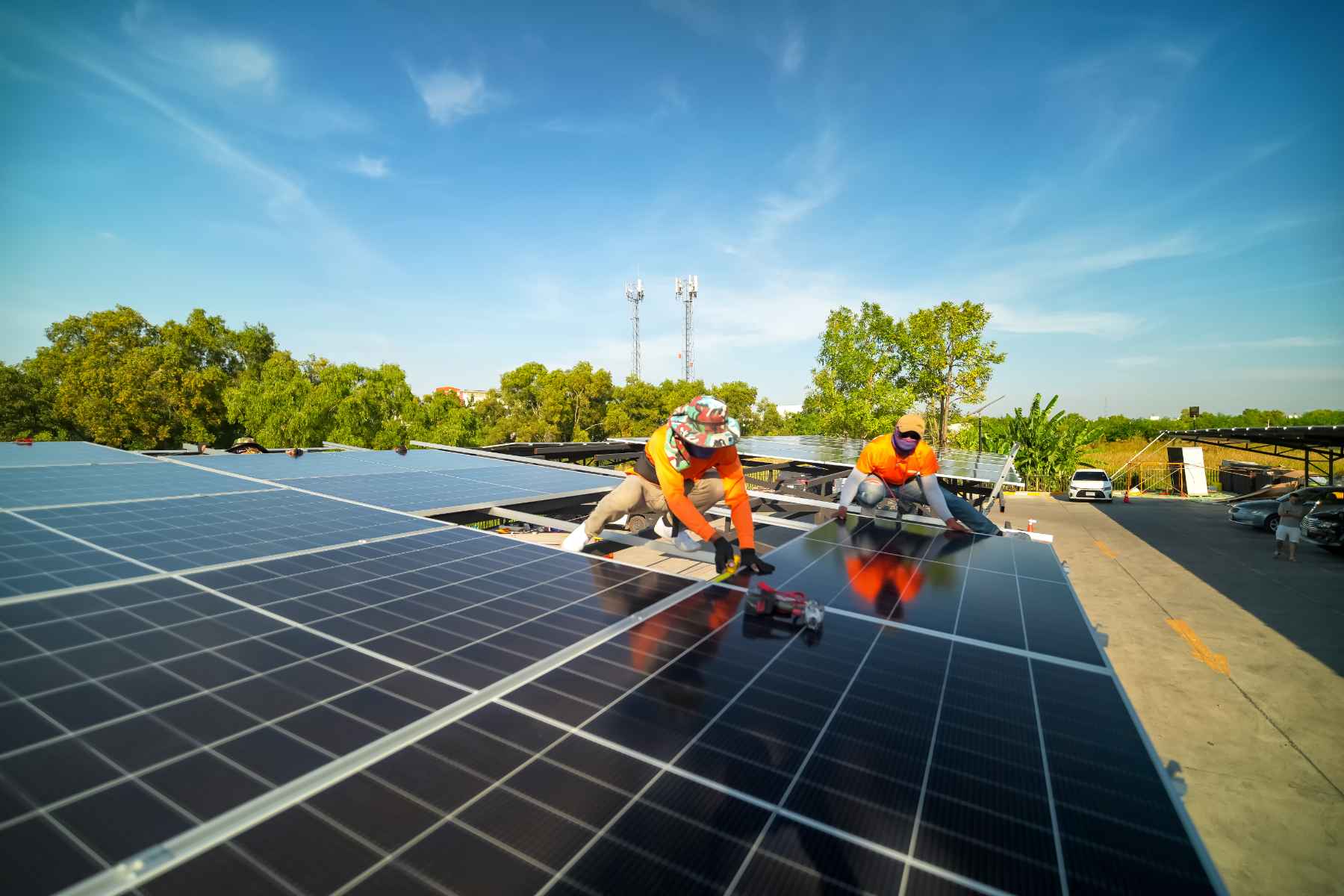
- Solar PV Module
Monocrystalline or polycrystalline panels sized to generate sufficient daily energy. Typically 150‑400 W per pole. - Lithium Battery Storage
Lithium iron phosphate (LiFePO₄) batteries provide high cycle life, wide temperature tolerance, and deep discharge capability. Battery capacity sized for 3‑5 days of autonomy. - LED Luminaire
High‑efficiency LEDs (130‑180 lm/W) with CCT options (3000‑5000K). Fixtures rated IP65 or higher for weather resistance. - Charge Controller
Maximum Power Point Tracking (MPPT) for optimal energy harvesting; programmable for dusk‑to‑dawn, dimming, or timer control. - Pole and Mounting
Steel or aluminum poles (6‑12 m) with top‑mount or side‑mount brackets. Powder‑coated for corrosion resistance.
2.2 Design Considerations
- Solar Insolation
We use solar resource data (e.g., from NREL) to ensure adequate generation throughout the year, accounting for seasonal variations. - Autonomy
Battery sizing based on worst‑case consecutive cloudy days. - Backup Options
Some systems include a grid‑tied option or generator for critical locations. - Smart Controls
Remote monitoring, dimming schedules, and fault reporting via GSM or LoRa.
2.3 Installation
- Foundation
Concrete pier or direct‑burial pole with anchor bolts. Depth based on pole height and soil conditions. - Panel Mounting
Tilt angle optimized for latitude to maximize annual energy capture. - Wiring
Weather‑resistant cables with waterproof connectors; all components housed in secure enclosures.
3. Grid‑Connected Street Lighting
For urban and suburban areas with existing power, we provide conventional street lighting:
- Utility Coordination
Liaison with utility for new service points, metering, and voltage (120/240V, 347V, etc.). - Conduit and Wiring
Underground PVC or fiberglass conduit with copper or aluminum conductors sized for voltage drop. - Poles
Steel, aluminum, or concrete poles with handholes for wiring. - Luminaires
LED fixtures with Type II, III, or V distributions; photoelectric cells for automatic on/off. - Controls
Centralized management systems (CMS) for remote dimming and fault detection.
4. Hybrid Systems
Where grid power is available but unreliable, we design hybrid systems that combine solar and grid with automatic switching to ensure continuous operation.
5. Construction and Installation
- Trenching
For underground grid connections, we excavate, lay conduit, and backfill with warning tape. - Pole Erection
Using cranes or boom trucks; plumb and torque anchor bolts. - Electrical Connections
Certified electricians complete terminations; we test insulation and ground continuity. - Commissioning
Verify illumination levels, control functions, and battery performance (for solar). Provide as‑built documentation.
6. Maintenance and Support
We offer ongoing maintenance:
- Solar Systems
Periodic cleaning of panels, battery health checks, and firmware updates. - Grid Systems
Lamp replacement, photoelectric sensor replacement, and pole inspection. - Warranty
Typically 5‑10 years on LED fixtures and solar components.
7. Typical Projects
- Industrial Zone Solar Street Lights
Installed 340 solar LED lights along 8 km of road. Each pole with 200 W panel, 1.2 kWh battery, and 100 W LED. Reduced energy costs by 62% and eliminated trenching. - Municipal Street Lighting Upgrade
Replaced 1,500 high‑pressure sodium fixtures with LED, incorporating smart controls that dim to 50% during off‑peak hours. Achieved 55% energy savings. - Rural Road Lighting
Provided 50 solar street lights for a remote community with no grid access. Lights operate dusk‑to‑dawn with motion‑sensing dimming. - Parking Lot Lighting
Designed and installed 80 LED fixtures on 12 m poles with photoelectric controls and backup generator.
Our street lighting solutions combine energy efficiency, durability, and aesthetic design to create safer, more sustainable public spaces. Whether solar or grid‑connected, we deliver systems that perform reliably for years.